
avaya 1416 phone manual
Avaya 1416 Phone Manual: A Comprehensive Guide
Avaya delivers innovative communication solutions, including the 1416 phone, empowering businesses with enhanced features and streamlined workflows for optimal productivity.
The Avaya 1416 is a versatile digital deskphone designed for modern business communication needs. As a key component of Avaya’s comprehensive communication solutions, it provides reliable performance and a user-friendly experience. Avaya, a multinational technology company, focuses on cloud communications and collaboration services, and the 1416 exemplifies this commitment.
This manual serves as a comprehensive guide to understanding, setting up, and utilizing the full potential of your Avaya 1416 phone. Whether you’re a new user or seeking to optimize its advanced features, this resource will provide clear instructions and valuable insights.
What is the Avaya 1416 Phone?
The Avaya 1416 is a digital deskphone engineered by Avaya, a leading provider of enterprise communication systems. It’s designed to enhance workplace productivity and streamline communication for businesses of all sizes. This phone delivers a robust set of features, including high-quality audio, intuitive navigation, and support for various call handling functions.
Avaya focuses on empowering customers with flexible communication tools, and the 1416 is a prime example. It integrates seamlessly with Avaya’s OneCloud platform and other communication solutions, offering a unified and efficient communication experience.
Key Features and Benefits
The Avaya 1416 boasts several key features, including a large, high-resolution display for easy viewing of call information. It offers excellent audio quality, enhancing clarity during conversations. Benefits include streamlined call handling with features like call hold, transfer, and conference calling.
Integration with Avaya OneCloud provides access to advanced capabilities like unified communications and collaboration tools. The phone’s intuitive interface boosts user productivity, while its robust design ensures reliability. Avaya’s focus on AI-powered tools further enhances the communication experience.

Setting Up Your Avaya 1416
Proper setup involves unboxing, connecting to the network, and powering on the device, followed by initial configuration to personalize settings for optimal use.
Unboxing and Initial Inspection
Carefully unpack your Avaya 1416 phone and verify all components are present. The box should contain the phone itself, a handset, a power adapter, a network cable, and potentially a quick start guide. Inspect the phone for any physical damage incurred during shipping, such as cracks or dents.
Check the handset connection to ensure it’s securely attached. Examine the network cable for any bends or breaks. Confirm the power adapter is the correct voltage for your region. Retain the original packaging for potential returns or warranty claims. Document any discrepancies immediately and contact Avaya support if needed.
Connecting the Phone to the Network
Utilize the provided network cable to connect the Avaya 1416 phone to an active network port, typically located on a wall or network switch. Ensure the port is enabled and configured for Power over Ethernet (PoE) if your network supports it, eliminating the need for a separate power adapter.
Alternatively, connect the power adapter to the phone and a working electrical outlet. Verify the network connection by observing the phone’s display for network activity indicators. If the phone doesn’t connect, check the cable and port, and consult your network administrator.
Powering On and Initial Configuration
Once the Avaya 1416 is connected to the network and powered on, allow a few moments for it to boot up and establish a connection with the Avaya system. The phone will automatically attempt to obtain an IP address and register with the server.
During initial configuration, you may be prompted to enter user credentials or select a pre-configured profile. Follow the on-screen instructions to complete the setup process. If automatic configuration fails, contact your system administrator for assistance with manual configuration settings.
Understanding the Phone Interface
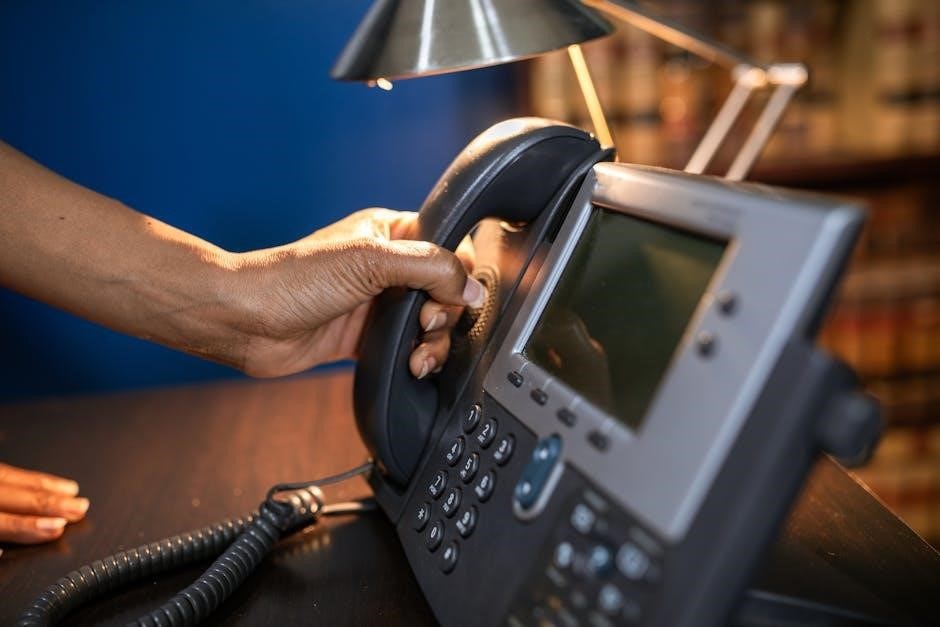
The Avaya 1416 boasts an intuitive interface, featuring a clear display screen and easily accessible buttons for seamless navigation and efficient call management.
Display Screen Overview
The Avaya 1416’s display screen is designed for clarity and ease of use, providing essential call information at a glance. Users can readily view caller ID, extension numbers, and call duration. The screen also displays softkey functions, dynamically changing to reflect the current call state or menu options. Brightness is adjustable for optimal viewing in various lighting conditions.
Furthermore, the display supports multiple languages, catering to diverse work environments. Icons clearly indicate features like voicemail, message waiting, and do not disturb status. The screen’s layout is logically organized, ensuring quick access to vital information and simplifying phone operation for all users.
Button Functions and Navigation
The Avaya 1416 features a user-friendly button layout for intuitive navigation. Dedicated buttons include those for call control – answer, end call, hold, and transfer. Programmable softkeys adapt to the current context, offering quick access to frequently used functions. A navigation cluster allows scrolling through menus and phonebooks.
The phone also incorporates dedicated buttons for features like voicemail and redial. Users can easily adjust volume using dedicated controls. The consistent button arrangement promotes efficient operation, minimizing the learning curve and maximizing productivity. Customization options allow tailoring button functions to individual user preferences.
Volume Control and Mute
Adjusting the audio levels on your Avaya 1416 is straightforward. Dedicated volume up and down buttons allow precise control over the ringer, handset, and headset volumes. These controls ensure clear communication in various environments. The mute function instantly silences your microphone, providing privacy during calls.
A visual indicator confirms when the mute function is active. Quick access to mute is crucial for maintaining confidentiality. Users can easily toggle mute on or off with a single button press. Proper volume adjustment and mute functionality contribute to a professional and productive call experience.

Making and Receiving Calls
The Avaya 1416 facilitates seamless communication, offering intuitive call placement and reception features for efficient handling of all incoming and outgoing interactions.
Placing a Call
To initiate a call on your Avaya 1416, simply lift the handset or press the speakerphone button. Then, dial the desired phone number using the keypad. The display screen will show the number you are dialing, along with the call duration once connected. For internal calls, you may only need to dial an extension number.
Avaya’s systems support various dialing methods, including direct dialing and speed dialing. Utilize the phonebook feature for frequently contacted numbers, streamlining the call placement process. Remember to verify the number before completing the call to avoid misdials. The 1416 ensures clear audio quality for every conversation.
Answering an Incoming Call
When receiving a call on your Avaya 1416, the phone will ring, and the display screen will illuminate with caller ID information, if available. To answer the call, simply lift the handset or press the speakerphone button. The call will connect immediately, allowing for clear communication.
Avaya prioritizes user experience, making call answering intuitive. You can also answer the call using a headset if one is connected. The 1416 provides visual cues, such as a flashing indicator, to alert you to incoming calls, ensuring you never miss important conversations. Enjoy seamless connectivity with Avaya’s reliable technology.
Call Hold and Transfer
To place a call on hold, press the ‘Hold’ button during an active conversation. The caller will hear hold music, indicating the call is temporarily paused. To resume, press ‘Hold’ again. Transferring a call requires dialing the extension number of the desired recipient while on a call.
Avaya’s 1416 facilitates efficient call management. Once the recipient answers, announce the transfer and press the ‘Transfer’ button to connect the caller. This streamlined process enhances workplace collaboration. Avaya prioritizes seamless communication, enabling quick and effective call handling for increased productivity.
Advanced Features
Explore the Avaya 1416’s enhanced capabilities, including a robust phonebook, detailed call history, and convenient conference calling options for improved communication.
Using the Phonebook
The Avaya 1416 phonebook feature allows users to store and quickly access frequently dialed numbers, enhancing efficiency. To add a contact, navigate to the phonebook application using the directional keys and select “Add New Contact.” Enter the name and corresponding phone number, then save the entry. Contacts can be easily searched by name or number.
Users can also edit existing entries or delete unwanted contacts. The phonebook supports a substantial number of entries, accommodating extensive contact lists. Efficiently manage your connections with this intuitive and powerful feature, streamlining your call process and boosting overall productivity within your organization.
Call History and Redial
The Avaya 1416 phone conveniently maintains a detailed call history, allowing users to review recent outgoing, incoming, and missed calls. Access the call history log via the dedicated button or menu option. Each entry displays the date, time, and phone number associated with the call.
The redial function quickly redials the last number dialed, saving time and effort. Simply press the redial button to initiate the call. The phone also often stores a list of recently dialed numbers for easy access. These features ensure you never lose track of important contacts or struggle to reconnect with previous callers.
Conference Calling
The Avaya 1416 phone facilitates efficient conference calls, enabling multiple participants to connect and collaborate seamlessly. Initiate a conference call by placing a call, then adding additional parties using the conference button. The system supports a defined number of participants, ensuring clear audio quality for all attendees.
Manage conferences easily with features like muting individual participants or placing the conference on hold. This functionality streamlines meetings and enhances productivity. Avaya’s technology delivers reliable and secure conference calling, vital for effective team communication and decision-making.

Customization and Settings
Personalize your Avaya 1416 experience by adjusting settings like ringtone, volume, and date/time, tailoring the phone to individual preferences and work styles.
Adjusting Ringtone and Volume
Personalizing your Avaya 1416’s audio experience is straightforward. To change the ringtone, navigate through the phone’s settings menu, typically accessed via the ‘Options’ or ‘Settings’ button. A list of available ringtones will appear, allowing you to preview and select your preferred sound. Volume control is equally accessible, often featuring dedicated up and down buttons on the phone itself.
You can adjust the ringer volume, handset volume, and headset volume independently to suit your environment and listening preferences. Ensure the volume levels are appropriate for clear audibility without being disruptive. Remember to save any changes made within the settings menu to ensure they are retained.
Setting Date and Time
Accurate date and time settings are crucial for call history and scheduling features on your Avaya 1416. Access the settings menu, usually through an ‘Options’ or ‘Settings’ button on the phone’s interface. Locate the ‘Date & Time’ option and select it. You’ll typically be presented with fields to manually enter the current date, time, and time zone.
Some models may offer automatic time synchronization via the network. Ensure the correct time zone is selected for accurate call timestamps and scheduling. Save your changes after inputting the information to confirm the new settings. Incorrect settings can affect call logging and other time-sensitive functions.
User Profile Configuration
Avaya 1416 phones often support individual user profiles, allowing personalized settings for each user. Access the ‘User Profile’ or ‘Personalization’ section within the phone’s settings menu. Here, you can typically configure preferences like ringtone, volume levels, and display settings tailored to your needs.
Some systems allow assigning a unique extension or user ID to each profile. This ensures calls are routed correctly and personalized features function as intended. Saving your profile ensures your preferences are retained even after phone restarts, enhancing your overall user experience and productivity.

Troubleshooting Common Issues
Avaya 1416 troubleshooting involves checking network connectivity, power, and configuration settings; resolving issues like no dial tone or poor audio quality quickly.
No Dial Tone
Experiencing no dial tone on your Avaya 1416? First, verify the phone’s power connection and ensure the handset is properly seated. Confirm the network cable is securely plugged into both the phone and the wall jack or network switch.
Check if other phones on the same network are functioning correctly to isolate the issue. If the problem persists, examine the phone’s configuration settings within the Avaya system to confirm it’s correctly registered and provisioned. A reboot of the phone can sometimes resolve temporary glitches. Contact your IT administrator or Avaya support if these steps don’t restore dial tone functionality.
Poor Audio Quality
Experiencing poor audio quality with your Avaya 1416? Begin by checking the handset earpiece and microphone for obstructions. Verify the volume level isn’t set too low or distorted. Ensure the network cable is securely connected, as a weak connection can degrade audio.
Test with another phone on the same line to determine if the issue is phone-specific or network-related. If using a headset, confirm it’s properly connected and functioning. Within the Avaya system, check for any configured audio codecs that might be impacting quality. Contact your IT support or Avaya for further assistance.
Phone Not Registering
If your Avaya 1416 fails to register with the network, first confirm the power supply is correctly connected and functioning. Verify the Ethernet cable is securely plugged into both the phone and the network port. Check network connectivity by testing with another device on the same port.
Ensure the phone’s MAC address is authorized within the Avaya system’s configuration; Review the phone’s IP settings – it may require a static IP or DHCP assignment. Contact your IT administrator or Avaya support to verify the phone’s provisioning and network settings.

Avaya OneCloud Integration
Avaya OneCloud expands the 1416’s capabilities with unified communications, collaboration, and Contact Center as a Service (CCaaS) features for enhanced connectivity.
Avaya OneCloud Capabilities
Avaya OneCloud dramatically enhances the functionality of the 1416 phone, offering a comprehensive suite of cloud-based communication tools. This integration provides access to unified communications as a service (UCaaS), streamlining workflows and boosting team collaboration. Contact Center as a Service (CCaaS) capabilities improve customer engagement and agent efficiency. Furthermore, the platform supports Communication Platform as a Service (CPaaS), enabling customized communication experiences.
These features collectively deliver smarter customer interactions, increased business agility, and reduced operational costs. Avaya OneCloud allows businesses to scale their communication infrastructure easily, adapting to evolving needs and ensuring a future-proof solution alongside the 1416.
Connecting to Cloud Services
Connecting your Avaya 1416 phone to Avaya OneCloud requires a stable network connection and proper configuration within the Avaya portal. This typically involves registering the phone’s MAC address and associating it with a user account. Ensure your network supports the necessary protocols for SIP communication. Detailed instructions are available through Avaya’s online documentation and support resources.
Successful connection unlocks advanced features like cloud-based phonebooks, unified messaging, and seamless integration with other Avaya cloud services. Proper setup guarantees optimal performance and access to the full range of OneCloud capabilities for your 1416 phone.

Avaya Support Resources
Avaya provides extensive support, including online documentation, FAQs, forums, and a partner network, ensuring users can quickly resolve issues and maximize their phone’s potential.
Accessing Avaya Support
Avaya offers multiple avenues for accessing dedicated support resources. Users can begin by visiting the official Avaya support website, a comprehensive hub for product assistance and service requests. This portal provides access to downloadable resources, including detailed manuals specifically for the 1416 phone model.
Furthermore, Avaya maintains active online forums where users can connect with peers and Avaya experts to discuss issues and share solutions. For personalized assistance, a quick form is available to initiate contact with Avaya’s support team, or you can locate the nearest Avaya contact or reseller.
Online Documentation and FAQs
Avaya provides extensive online documentation to assist users with their 1416 phone. The Avaya support website hosts a wealth of resources, including detailed user guides, installation instructions, and troubleshooting tips. These documents cover all aspects of the phone’s functionality, from basic operation to advanced features like conference calling and call transfer;
A frequently asked questions (FAQ) section addresses common issues and provides quick solutions. Users can efficiently find answers to their questions without needing to contact support directly. Accessing these resources empowers users to resolve problems independently and maximize their Avaya 1416 experience.
Avaya Partner Network
Avaya’s robust partner network offers localized support and expertise for the 1416 phone. These partners provide services ranging from initial setup and configuration to ongoing maintenance and troubleshooting. They possess in-depth knowledge of Avaya systems and can tailor solutions to meet specific business needs.
Finding an Avaya partner ensures access to certified professionals who can deliver reliable assistance. The network includes cloud communications and collaboration service providers across the United States, offering comprehensive support for Avaya products. Leveraging this network streamlines implementation and maximizes the value of your Avaya investment.
Avaya and Competitors
Avaya competes with companies like Genesys, offering diverse contact center software solutions; however, Avaya distinguishes itself through AI-powered communication tools and innovation.
Avaya vs. Genesys
Avaya and Genesys are both prominent players in the contact center and unified communications landscape, but they cater to slightly different needs; Genesys often focuses on larger enterprises with complex requirements, while Avaya provides solutions scalable for businesses of all sizes. Key differences lie in features, pricing, and AI capabilities.
Avaya’s strength resides in its comprehensive suite, including the 1416 phone system, and its integration with Avaya OneCloud. Genesys excels in omnichannel engagement and workforce optimization. Choosing between them depends on specific business goals, budget, and the desired level of customization. Both offer robust platforms, but Avaya’s flexibility is noteworthy.

Avaya Technologies and Innovations
Avaya pioneers AI-powered communication tools like Web.alive and multi-business switches, enhancing user experiences and boosting productivity within unified systems.
AI-Powered Communication Tools
Avaya is at the forefront of integrating Artificial Intelligence into its communication platforms, delivering smarter customer experiences and improved business efficiency. These tools analyze interactions, providing real-time insights and automating tasks. Avaya’s AI capabilities enhance contact center operations, personalize customer journeys, and empower agents with intelligent assistance. The company’s commitment to AI extends to its cloud solutions, offering predictive analytics and proactive support. Avaya’s innovations aim to reduce costs, increase revenue, and foster stronger customer relationships through intelligent communication solutions, benefiting users of devices like the 1416 phone.
Avaya Web.alive Technology
Avaya Web.alive revolutionized audio and video experiences by integrating 3D surround sound and video game graphics. This technology dramatically enhanced communication across geographically dispersed teams and departments. It provided a more immersive and engaging user experience, fostering collaboration and improving productivity. Avaya aimed to transform how businesses connect with customers and employees through this innovative approach. While specific integration details with the 1416 phone may vary, Avaya’s commitment to rich media experiences underscores its dedication to delivering cutting-edge communication solutions.
Avaya Multi-Business Switches
Avaya’s multi-business switches, like the S8700 media server, are integral components of robust communication networks. These switches support the Avaya 1416 phone by providing the necessary infrastructure for reliable call handling and data transmission. Utilizing Gigabit Ethernet modules within the Avaya Communication Manager, these switches ensure high-performance connectivity. They are designed for scalability and resilience, accommodating growing business needs. Proper configuration of these switches is crucial for optimal 1416 phone functionality, guaranteeing seamless communication and efficient network operation within an organization.